
Top 5 Reasons: Aerospace Manufacturers Rely on Tapered End Mills
In aerospace machining, geometry is everything. Turbine blades, impellers, blisks, structural housings, and flow-critical components demand long reach, high rigidity, and flawless surface integrity , often in titanium, Inconel, and other high-temperature alloys.
Tapered carbide ball end mills are purpose-built for these challenges. Below are the top five performance-driven reasons aerospace manufacturers depend on them.
1. Increased Rigidity at Extended Reach
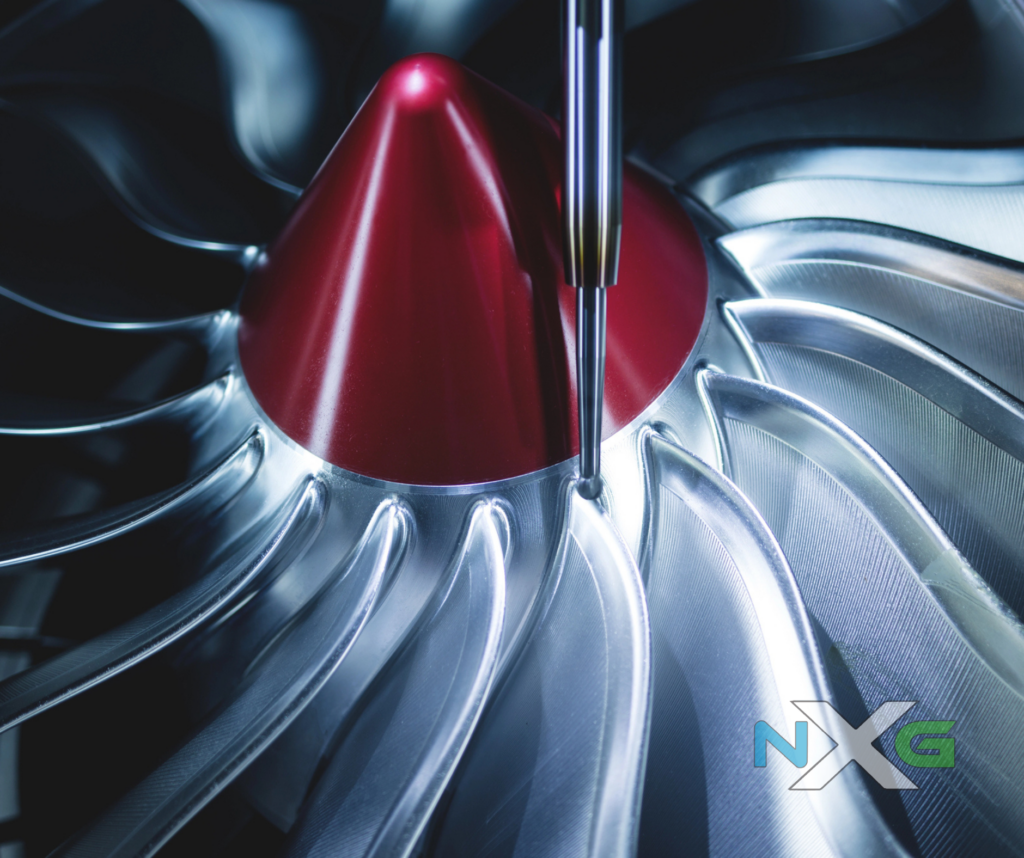
- A tapered profile increases core strength compared to straight ball nose tools, which:
- Reduces deflection at high length-to-diameter ratios
- Maintains true form accuracy on blade profiles
- Improves dimensional control on thin walls
When machining high-value aerospace components, rigidity directly translates to lower scrap risk and improved repeatability.
2. Reduced Vibration in High-Temperature Alloys
Materials like titanium and Inconel amplify instability due to heat concentration and cutting resistance.
The tapered geometry:
- Minimizes harmonic vibration
- Reduces chatter marks on aerodynamic surfaces
- Stabilizes finishing passes in 5-axis simultaneous motion
This is critical for turbine blades and compressor components, where surface finish affects airflow efficiency and fatigue life.
3. Superior Surface Finish on Contoured Profiles

Aerospace aerodynamic components depend on smooth surface transitions.
Tapered carbide ball end mills:
- Enable fine step-over finishing
- Maintain consistent radial engagement
- Produce smooth blended surfaces
- Reduce secondary polishing requirements
On turbine airfoils and impeller vanes, improved surface integrity enhances both performance and longevity.
4. Improved Tool Life in Demanding Aerospace Materials
Tool failure in aerospace environments is costly , not just in tooling expense, but in part value.
The tapered design:
- Distributes cutting forces more effectively
- Reduces edge chipping
- Improves heat management at the cutting zone
- Extends tool life in nickel-based superalloys
For aerospace manufacturers running high-value turbine and structural components, tool predictability is essential to process control.
5. Enhanced Accuracy in 5-Axis Simultaneous Machining
Modern aerospace production depends on 5-axis simultaneous machining to achieve complex geometries in fewer setups.

Tapered carbide ball end mills:
- Provide stable tool paths during multi-axis motion
- Maintain profile accuracy on compound curves
- Support consistent cusp height control
- Deliver reliable blending between tool passes
This level of control is critical for turbines, impellers, blisks, and flow-critical housings where microns matter.
The Aerospace Bottom Line
In aerospace manufacturing, tool geometry is a strategic decision , not just a consumable.
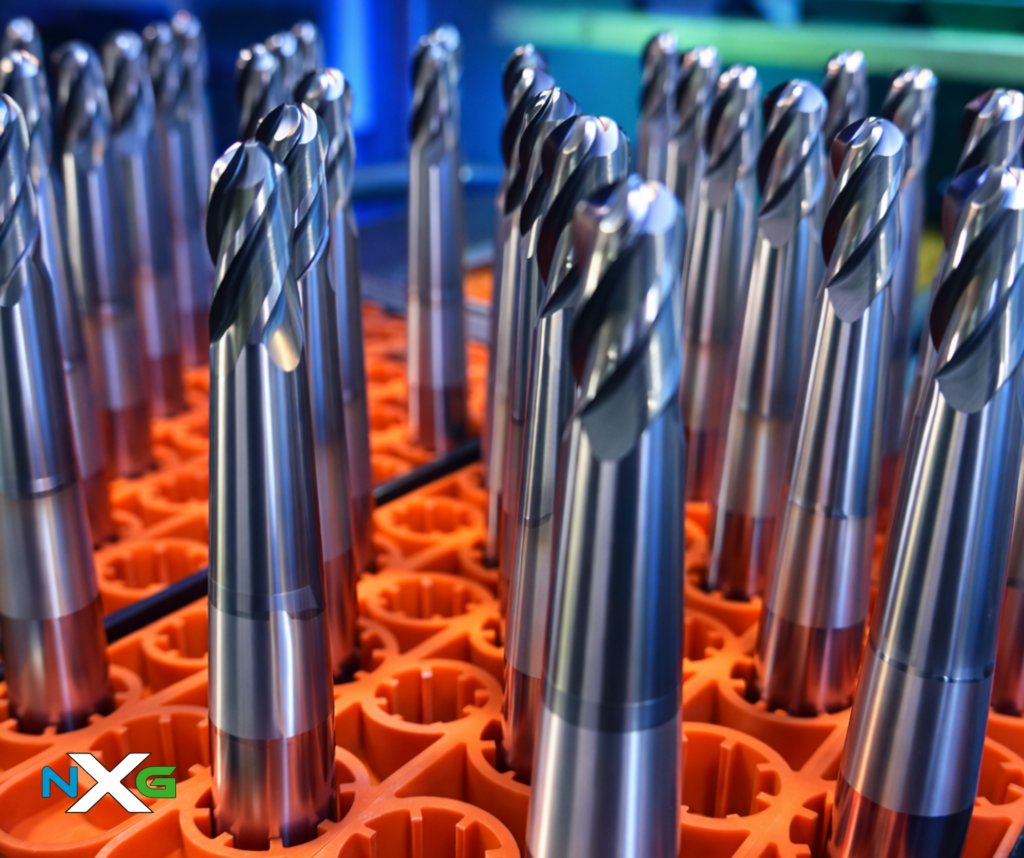
Tapered carbide ball end mills provide:
- Rigidity where reach is required
- Stability in heat-resistant alloys
- Surface finishes that support aerodynamic performance
- Tool life that protects high-value components
- Accuracy in advanced 5-axis environments
For turbine blades, impellers, compressor sections, and structural aerospace components, the right geometry drives both performance and profitability.
When aerospace tolerances tighten, rigidity wins.
Looking to step up to the next generation of performance tapered milling cutters, designed precisely for your machining contraints and work material? Contact NEXGEN and let’s get started!
Find Posts
Need help deciding?
Talk to NEXI, our AI assistant!
Prefer to speak with a team member?
Reach out to our customer service team