
The Right Tool Holder: A Practical Guide
The tool holder is one of the most overlooked components in machining, yet it has a direct impact on accuracy, tool life, vibration control, and overall productivity. Selecting the wrong holder can lead to premature tool wear, poor surface finishes, and wasted time. On the other hand, the right tool holder can elevate the performance of your machine and cutting tools.
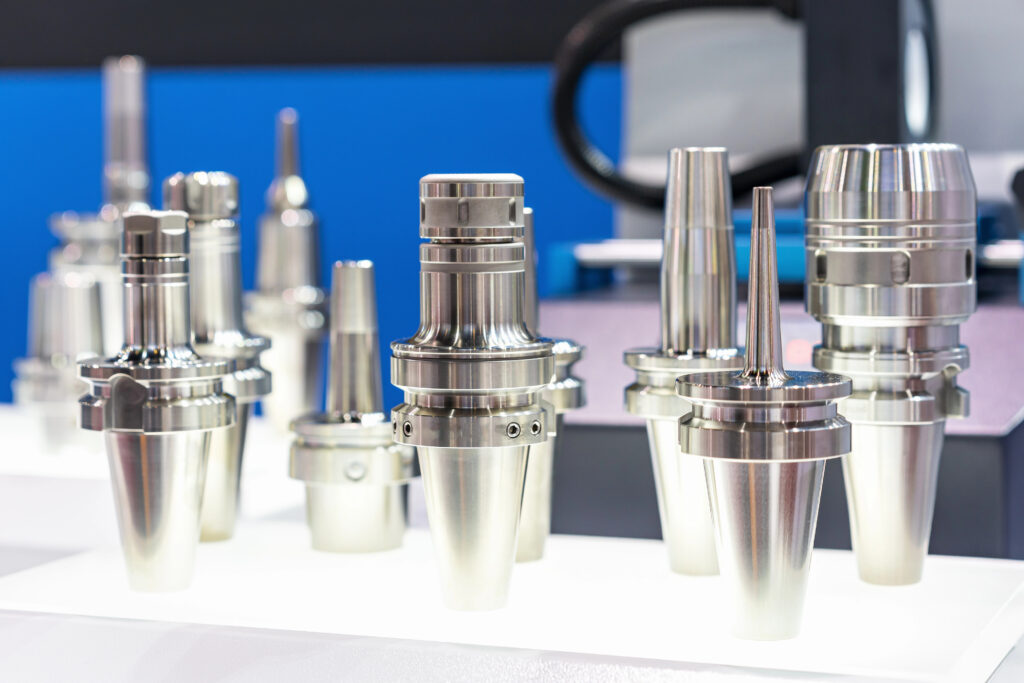
Choose Wisely
Below, we examine the most common tool holders, highlighting their advantages, limitations, and where they fit best in real-world applications.
Side Lock Holders
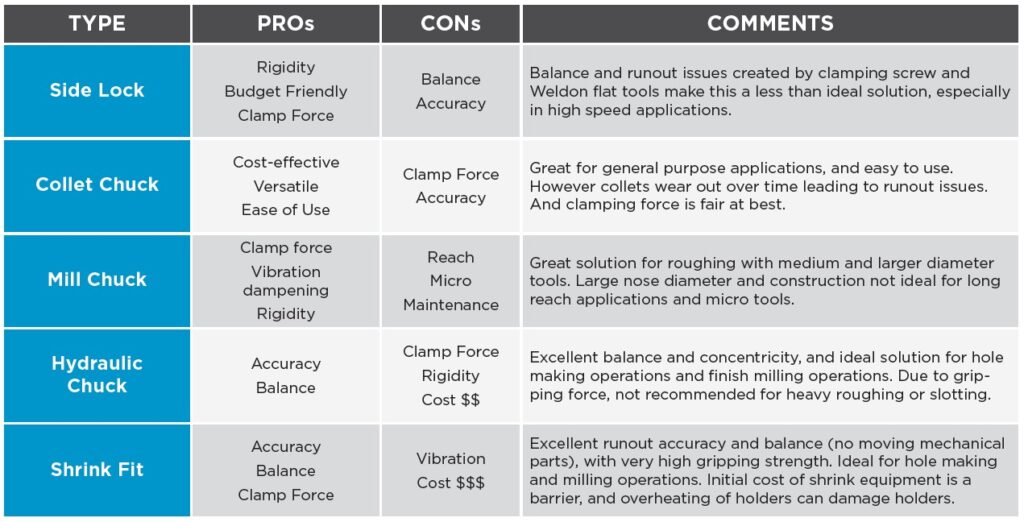
Pros: High rigidity, budget-friendly, strong clamping force
Cons: Poor balance and accuracy, runout issues, not ideal for high-speed applications
Recommendation:
Side lock holders are a simple, cost-effective option, often used with Weldon flat tools for roughing or less critical operations. Their strength lies in their rigidity and clamping force, making them a reliable choice for shops prioritizing affordability and toughness over precision. However, the clamping screw creates balance and runout issues, making them unsuitable for high-speed machining or applications where accuracy is critical. If you’re running older machines, making heavy cuts, or working in less precision-driven environments, side lock holders can still have a place in your shop.
Collet Chucks
Pros: Cost-effective, versatile, easy to use
Cons: Fair clamping force, collets wear out leading to runout issues
Recommendation:
Collet chucks are often considered the “workhorse” of tool holding. They’re incredibly versatile and can grip a wide range of tool sizes, making them ideal for general-purpose machining, job shops, and applications where tool changes need to happen quickly. The downside is that collets lose accuracy as they wear, and their clamping force is limited compared to other holders. For finishing passes or tighter tolerance jobs, they may not deliver the stability you need. Still, for light to medium-duty milling, drilling, and reaming, they strike an excellent balance of affordability, ease of use, and functionality.
Mill Chucks
Pros: Strong clamping force, excellent vibration dampening, high rigidity
Cons: Large nose diameter limits use in long-reach or micro applications, requires maintenance
Recommendation:
Mill chucks shine in roughing applications, particularly when using medium to large diameter tools. Their robust construction provides high rigidity and vibration dampening, which extends tool life and allows for more aggressive feeds and speeds. However, the bulky nose design makes them unsuitable for tight spaces, fine-detail work, or micro tooling. They also require routine maintenance to ensure optimal performance. If your shop regularly runs heavy cuts and needs maximum stability with larger tools, mill chucks are an excellent investment. Just don’t expect them to cover every situation, pair them with more precise holders for finishing work.
Hydraulic Chucks
Pros: Excellent accuracy, balance, and rigidity; reliable clamping force
Cons: Higher cost, not suited for heavy roughing or slotting
Recommendation:
Hydraulic chucks are designed for precision. They use fluid pressure to secure the tool, offering exceptional concentricity and balance. This makes them a go-to choice for hole-making operations, finishing passes, and applications where surface quality is non-negotiable. However, their gripping strength is lower than shrink fit or mill chucks, so they’re not suitable for heavy roughing, slotting, or aggressive material removal. For shops doing high-precision milling, aerospace or medical machining, or fine-detail work, hydraulic chucks can dramatically improve accuracy and extend tool life. The higher upfront cost is justified when tight tolerances and superior finishes are required.
Shrink Fit Holders
Pros: Outstanding accuracy, balance, and gripping force; excellent vibration control
Cons: High upfront equipment cost, risk of damage from overheating
Recommendation:
Shrink fit holders are considered one of the most advanced tool-holding solutions. By using thermal expansion to grip the tool shank, they provide near-perfect concentricity, balance, and high clamping strength without moving parts. This results in excellent tool life, smoother surface finishes, and reliable performance at high speeds. They are especially well-suited for finishing, hole-making, and milling operations where precision and balance are critical. The downside is the initial investment in heating equipment and the risk of damaging holders if they’re overheated. For shops pushing productivity in aerospace, die/mold, or high-speed machining, shrink fit holders can be a game-changer, but they’re best reserved for situations where their advantages are fully utilized.
Final Thoughts
Every tool holder has its place in the shop. The right choice comes down to matching the holder’s strengths with your specific machining needs:
- Side Lock: Budget-friendly and rigid, best for older machines or rough cuts.
- Collet Chuck: Versatile and easy, a reliable general-purpose option.
- Mill Chuck: Powerful and stable, ideal for roughing with larger tools.
- Hydraulic Chuck: Precise and balanced, best for finishing and hole-making.
- Shrink Fit: Premium performance, unmatched accuracy for high-speed, high-precision applications.
Investing in the correct tool holder can improve accuracy, extend tool life, and maximize the return on your machine tools. Consider the application, the level of precision required, and your shop’s budget when choosing the right solution.
Have questions about optimizing your cutting process?
Contact us at sales@nexgentooling.com or follow us on social media for more machining tips.
Find Posts
Need help deciding?
Talk to NEXI, our AI assistant!
Prefer to speak with a team member?
Reach out to our customer service team